

The True Cost of Ignoring Stucco Cracks and Caulking in South Florida

South Florida’s climate is tough on buildings. The combination of heavy humidity, intense sun exposure, and salty air creates a perfect storm for structural damage.
What starts as a small crack in stucco or a failing caulk joint can quickly escalate into a costly repair project. A simple $300 caulking fix can turn into a $25,000 structural disaster if ignored.
Understanding the hidden costs behind cracked stucco and failed caulking or waterproofing is essential for property owners, especially in South Florida’s unique environment.

Why Stucco Cracks and Caulking Fails in South Florida
Stucco is a popular exterior finish in South Florida because of its aesthetic appeal and durability. However, the region’s climate puts stucco and caulking under constant stress:
Heavy Humidity: Moisture penetrates cracks and gaps, leading to water intrusion.
Sprinkler Systems: sprinklers systems wrong positioned to windows and exterior walls allow constant water intrusion and further damage.
High Sun Exposure: UV rays cause materials to expand, contract, and degrade faster.
Salt Air: Salt accelerates corrosion of metal lath and other structural components behind the stucco.
These factors cause stucco to crack and caulking to fail more quickly than in other climates. When cracks and gaps are left unattended, water seeps behind the stucco, damaging the underlying structure.
The Hidden Costs of Ignoring Stucco Cracks
Ignoring small cracks in stucco might seem like a way to save money, but it often leads to much higher expenses down the road. Here’s how the costs add up:
1. Water Damage and Concrete Spalling
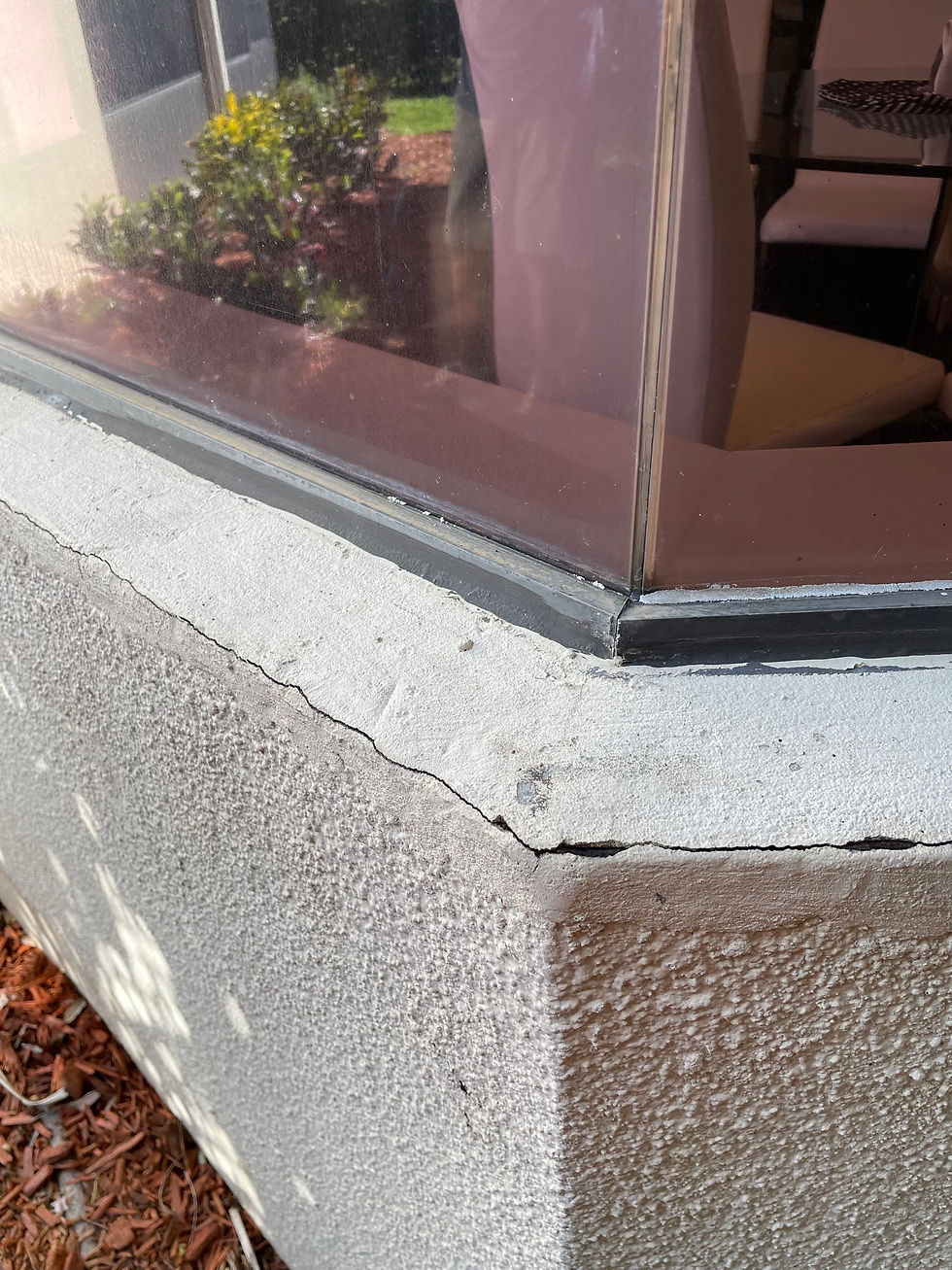
Water intrusion through cracks causes concrete spalling, a condition where the concrete surface peels, cracks, or flakes off. This happens because water reaches the steel reinforcement inside concrete, causing it to rust and expand. The expansion breaks the concrete apart.
Concrete spalling repair is expensive and labor-intensive. It requires removing damaged concrete, treating rusted steel, and applying new concrete. If left untreated, spalling can compromise the building’s structural integrity.
2. Mold and Mildew Growth

Moisture trapped behind stucco creates an ideal environment for mold and mildew. This not only damages building materials but also poses health risks to occupants. Mold remediation can be costly and disruptive, requiring removal of affected materials and thorough cleaning.
3. Decreased Property Value

Visible stucco cracks and water damage reduce curb appeal and property value. Potential buyers or tenants may be deterred by signs of neglect and the prospect of expensive repairs.
4. Increased Energy Costs

Damaged stucco and failed caulking reduce a building’s ability to keep out moisture and maintain insulation. This forces HVAC systems to work harder, increasing energy bills.
The Importance of Timely Stucco Crack Repair in Florida
Repairing stucco cracks promptly can prevent the cascade of damage described above. Stucco crack repair in Florida involves:
Cleaning and preparing the damaged area
Applying appropriate patching materials
Repainting or refinishing to restore protection
Professional repair ensures the building envelope remains watertight and structurally sound.
Why Commercial Building Waterproofing Matters
For commercial buildings, waterproofing is critical. These structures often have larger surface areas exposed to the elements and more complex designs with joints and penetrations that require careful sealing.
Commercial building waterproofing includes:
Inspecting and repairing stucco cracks and caulking
Applying waterproof membranes or coatings
Maintaining drainage systems to prevent water pooling
Investing in waterproofing protects the building’s structure, reduces maintenance costs, and extends its lifespan.
Real-Life Example: The Cost Difference of Early Repair
Consider a South Florida commercial property with minor stucco cracks and failing caulking around windows. The initial repair estimate for caulking and minor stucco patching is $300.
If the owner delays repairs for a year, water intrusion causes concrete spalling and mold growth behind the walls. The repair now involves:
Concrete spalling repair: $5,000
Mold remediation: $15,000
Re-caulking and stucco refinishing: $5,000
Total repair cost: $25,000
This example shows how a small, inexpensive repair can prevent a much larger financial burden.
How to Protect Your Property from Costly Damage
Property owners in South Florida should take these steps to avoid expensive repairs:
Regular Inspections: Check stucco and caulking annually, especially after storms.
Prompt Repairs: Fix cracks and failing caulking as soon as they appear.
Professional Waterproofing: Hire experts for commercial building waterproofing to ensure comprehensive protection.
Use Quality Materials: Choose caulking and stucco products designed for South Florida’s climate.
Maintain Drainage: Ensure gutters and downspouts direct water away from the building.


Comments